Category Europe

Where the European Manufacturing Market Stands Today

Europe’s automotive industry is not collapsing, but it is no longer a high-growth market. Instead, it is undergoing a structural transition, with hybrids rising, EVs stabilizing, and overall demand remaining weak. In this environment, Japanese companies must rethink their strategy—balancing short-term strength in hybrid vehicles with long-term competitiveness in EV technologies. At the same time, new opportunities are emerging beyond automotive. This article explores Europe’s industrial transformation and highlights four key sectors—semiconductors, factory automation, industrial decarbonization, and healthcare—where Japanese companies can play a decisive role in the next phase of growth.

How Japanese General Contractors Win Non-Japanese Clients in Europe

In Europe, Japanese general contractors are not working only with Japanese manufacturers. They have successfully delivered factory construction projects for Korean, German, American, and Swiss companies as well. The reason goes beyond language or cultural familiarity: Japanese contractors are valued for their ability to manage design, construction, and production facility integration as a single project, ensuring factories start operations on schedule. This article reviews several European factory projects and explores why non-Japanese manufacturers choose Japanese contractors, offering insights into how Japanese companies can approach non-Japanese clients in the European market.

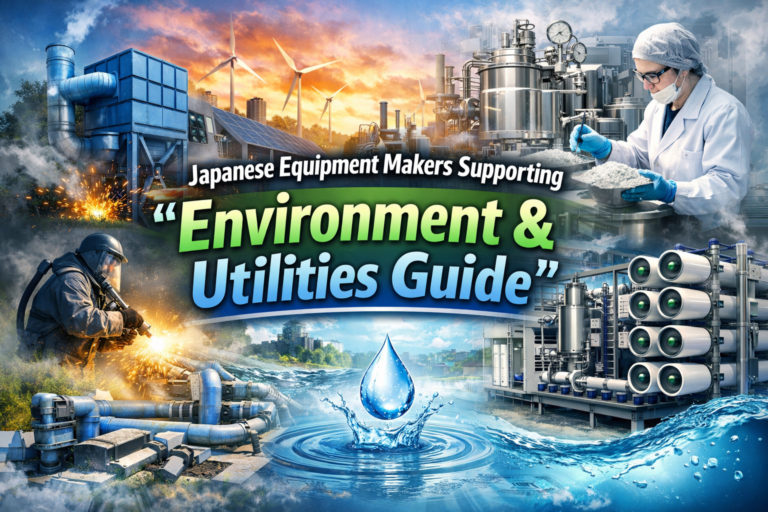
Japanese Equipment Manufacturers Supporting “Environment & Utilities”

In today’s European manufacturing environment, environmental and utility systems are no longer just about regulatory compliance. Air quality, dust control, powder handling, and water treatment directly impact product quality, equipment uptime, worker safety, and long-term operational efficiency.
This article provides a structured overview of leading Japanese equipment manufacturers supporting factory environments—from dust collection and powder process systems to blast equipment and industrial water treatment. Rather than ranking companies, we present them as part of a broader ecosystem, helping factory managers and facility engineers identify the right partner based on their specific operational challenges.

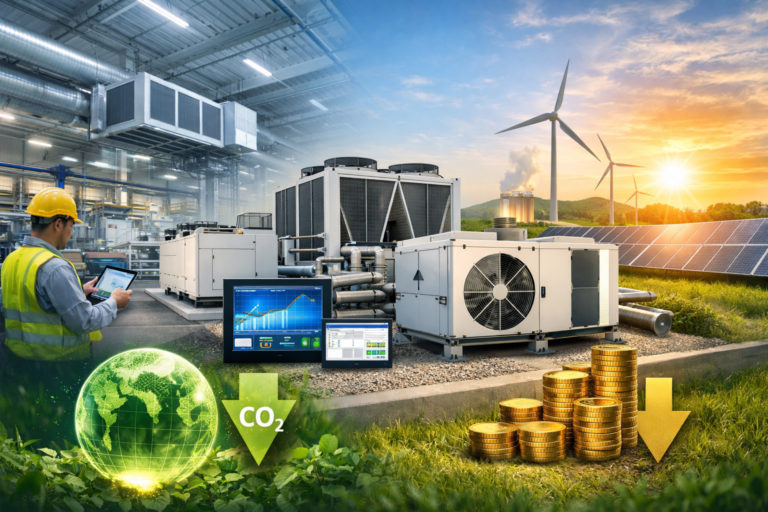
HVAC Energy Saving and CO₂ Reduction Strategies for Manufacturing Facilities

In Europe, rising energy prices and increasingly strict decarbonization targets have made HVAC energy efficiency and CO₂ reduction a critical issue for manufacturing facilities.
This article outlines practical HVAC energy-saving strategies, ranging from operational improvements to equipment retrofits and system upgrades, with a focus on factories and warehouses in Central and Eastern Europe.
In many cases, energy reductions of 10–30% can be achieved by optimizing existing operations and controls, even without large-scale equipment replacement.

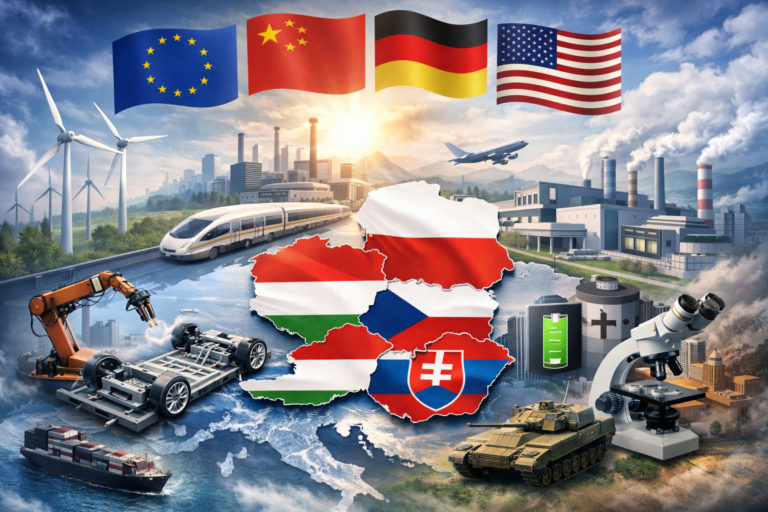
Summary of New Investments and Expansion Trends in European Manufacturing

While Europe’s manufacturing sector is often portrayed as being in decline, investment activity tells a more nuanced story. In Central and Eastern Europe in particular, new projects in electric vehicles, batteries, defense, and high-value manufacturing continue to move forward. This article reviews major new investments and expansion projects announced between late 2025 and early 2026, with a focus on Hungary, Poland, the Czech Republic, and Slovakia.

European Manufacturers in Hungary: From Autos to Food—The Latest Developments

Hungary has become one of Europe’s hottest manufacturing destinations, attracting major investments from German, French, Swiss, and Nordic companies. From Audi, Mercedes-Benz, and BMW’s billion-euro EV projects to Nestlé’s pet-food expansion and LEGO’s sustainable packaging hub, European manufacturers are turning Hungary into a Central European production powerhouse. This article explores the latest developments, investments, and strategic trends shaping Hungary’s industrial future in 2025.

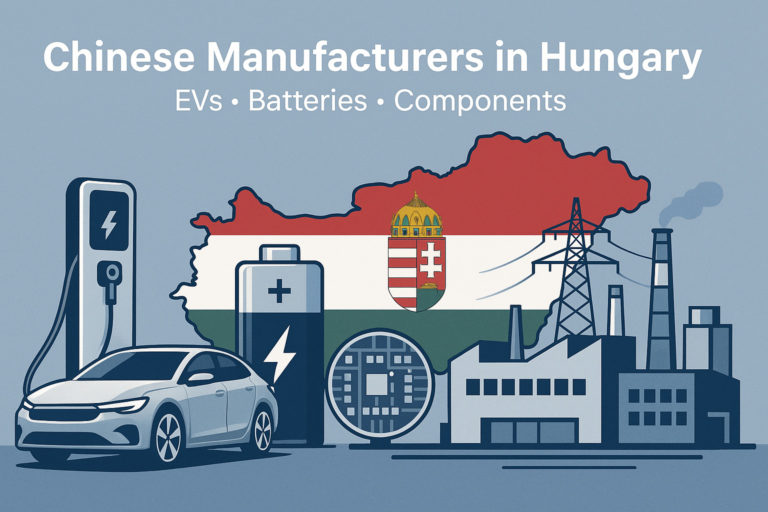
Chinese Manufacturers in Hungary and the Latest Developments

Hungary is emerging as a key hub for Chinese manufacturing investment in Europe. Major players such as BYD, CATL, and NIO are building or expanding EV and battery plants, while companies like Lenovo and Wanhua Chemical are strengthening their European bases. With investments ranging from hundreds of millions to several billion euros and projects creating thousands of jobs, Hungary has become a strategic gateway for Chinese firms thanks to government incentives and its strong automotive industrial base.

Trends in Manufacturing Investment by Foreign Companies in the Czech Republic

Since 2025, the Czech Republic has witnessed a surge of foreign manufacturing investments in high-tech sectors such as electric vehicles, batteries, and semiconductors. Companies from Europe, the U.S., and Asia are building new plants and expanding capacity, backed by government incentives and the country’s central European location. These projects, ranging from multibillion-dollar semiconductor fabs to new EV battery plants, are creating thousands of jobs and reinforcing the Czech Republic’s role as a manufacturing hub in Europe.

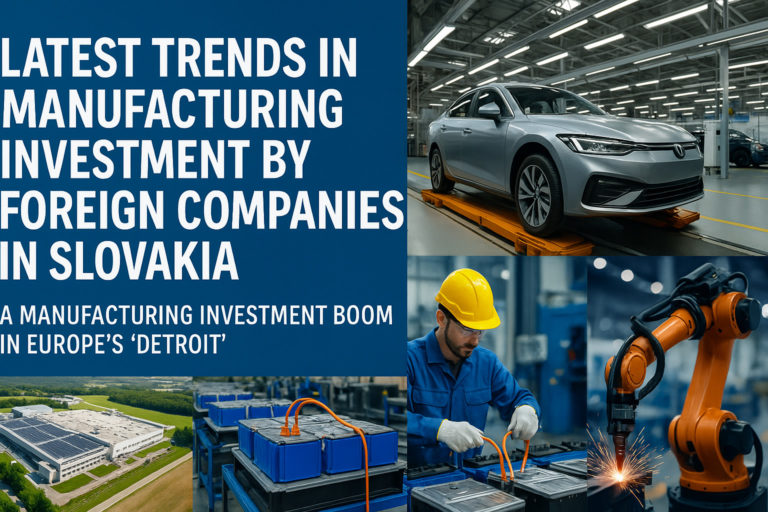
Latest Trends in Manufacturing Investment by Foreign Companies in Slovakia

Slovakia, often called the “Detroit of Europe,” continues to attract large-scale foreign manufacturing investment. Since 2025, global companies from Europe, the U.S., Korea, and China have expanded their presence, particularly in electric vehicles and battery industries. Major projects include Volvo’s €1.2 billion EV plant near Košice, Hyundai Mobis’ new EV module factory in Nováky, and Gotion-InoBat’s €1.2 billion battery gigafactory in Šurany, together creating thousands of new jobs and reinforcing Slovakia’s role as a Central European hub for green and high-tech industries.