Tag Battery

HVAC Energy Saving and CO₂ Reduction Strategies for Manufacturing Facilities
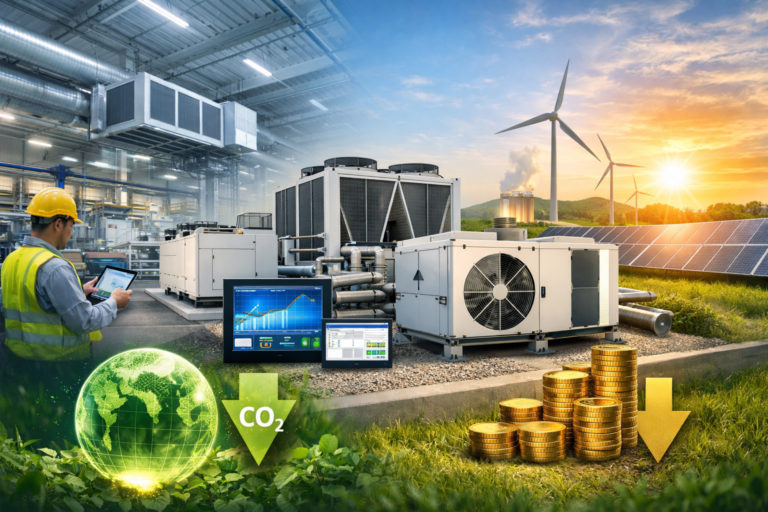
In Europe, rising energy prices and increasingly strict decarbonization targets have made HVAC energy efficiency and CO₂ reduction a critical issue for manufacturing facilities.
This article outlines practical HVAC energy-saving strategies, ranging from operational improvements to equipment retrofits and system upgrades, with a focus on factories and warehouses in Central and Eastern Europe.
In many cases, energy reductions of 10–30% can be achieved by optimizing existing operations and controls, even without large-scale equipment replacement.
Summary of New Investments and Expansion Trends in European Manufacturing

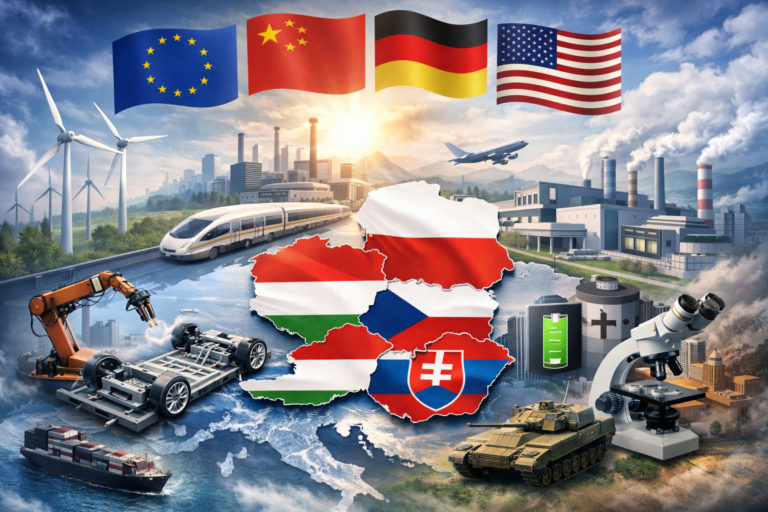
While Europe’s manufacturing sector is often portrayed as being in decline, investment activity tells a more nuanced story. In Central and Eastern Europe in particular, new projects in electric vehicles, batteries, defense, and high-value manufacturing continue to move forward. This article reviews major new investments and expansion projects announced between late 2025 and early 2026, with a focus on Hungary, Poland, the Czech Republic, and Slovakia.

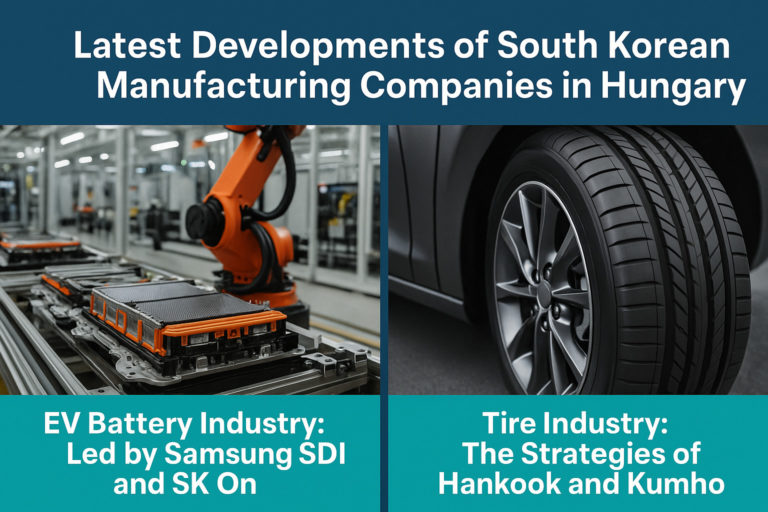
Latest Developments of South Korean Manufacturing Companies in Hungary

South Korea has emerged as one of Hungary’s most influential industrial partners, driving major investment in EV batteries, tires, automotive components, and electronics. Companies like Samsung SDI and SK On are building Europe’s largest battery ecosystem, while Hankook and Kumho are expanding tire production to meet growing demand. Alongside industrial giants, food manufacturer CJ CheilJedang and others are diversifying Korea’s footprint across Hungary. Supported by government incentives and strategic cooperation, these projects have made Hungary a key European hub for Korean innovation and advanced manufacturing.

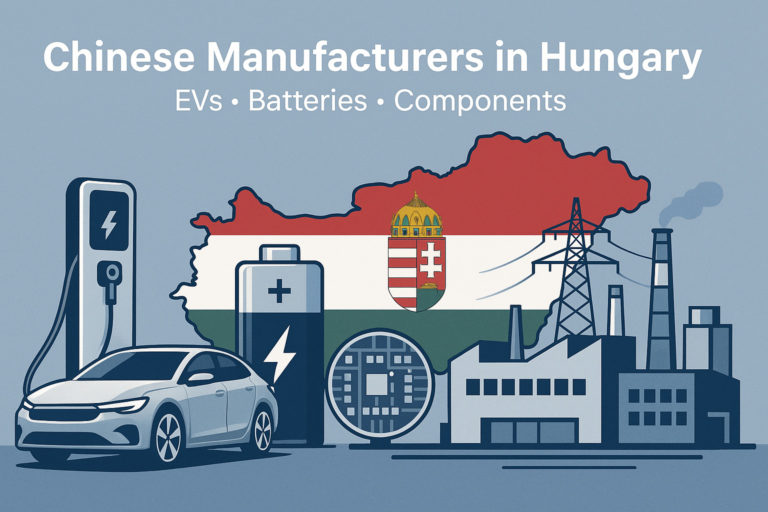
Chinese Manufacturers in Hungary and the Latest Developments

Hungary is emerging as a key hub for Chinese manufacturing investment in Europe. Major players such as BYD, CATL, and NIO are building or expanding EV and battery plants, while companies like Lenovo and Wanhua Chemical are strengthening their European bases. With investments ranging from hundreds of millions to several billion euros and projects creating thousands of jobs, Hungary has become a strategic gateway for Chinese firms thanks to government incentives and its strong automotive industrial base.

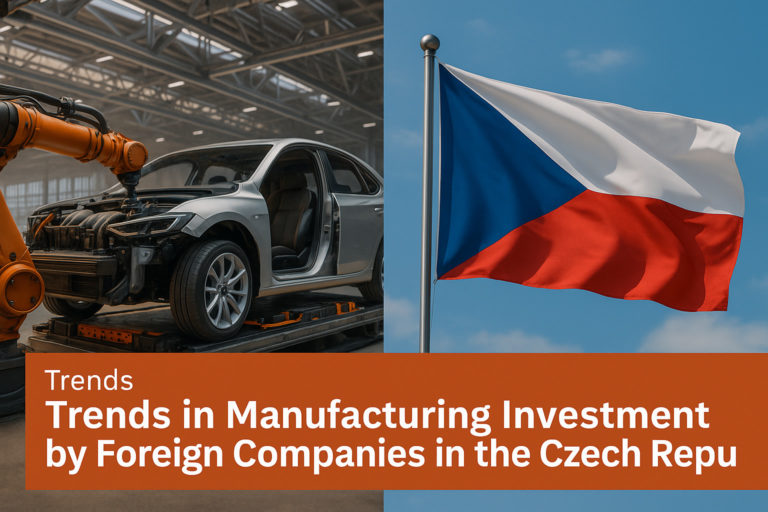
Trends in Manufacturing Investment by Foreign Companies in the Czech Republic

Since 2025, the Czech Republic has witnessed a surge of foreign manufacturing investments in high-tech sectors such as electric vehicles, batteries, and semiconductors. Companies from Europe, the U.S., and Asia are building new plants and expanding capacity, backed by government incentives and the country’s central European location. These projects, ranging from multibillion-dollar semiconductor fabs to new EV battery plants, are creating thousands of jobs and reinforcing the Czech Republic’s role as a manufacturing hub in Europe.

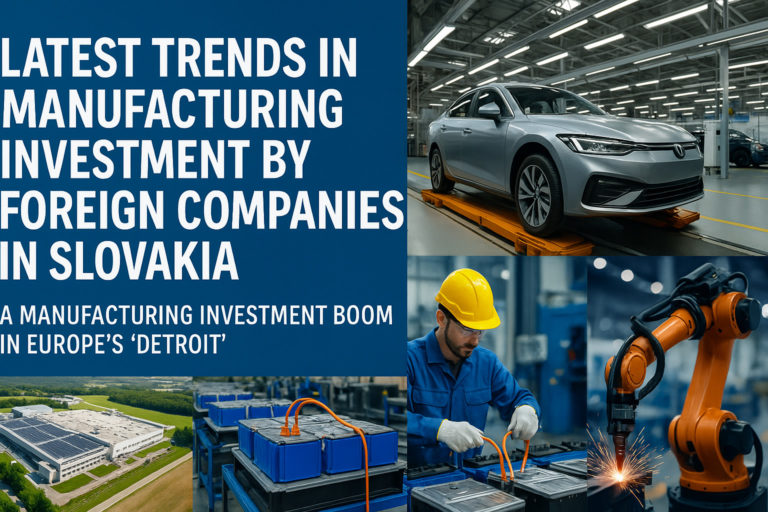
Latest Trends in Manufacturing Investment by Foreign Companies in Slovakia

Slovakia, often called the “Detroit of Europe,” continues to attract large-scale foreign manufacturing investment. Since 2025, global companies from Europe, the U.S., Korea, and China have expanded their presence, particularly in electric vehicles and battery industries. Major projects include Volvo’s €1.2 billion EV plant near Košice, Hyundai Mobis’ new EV module factory in Nováky, and Gotion-InoBat’s €1.2 billion battery gigafactory in Šurany, together creating thousands of new jobs and reinforcing Slovakia’s role as a Central European hub for green and high-tech industries.

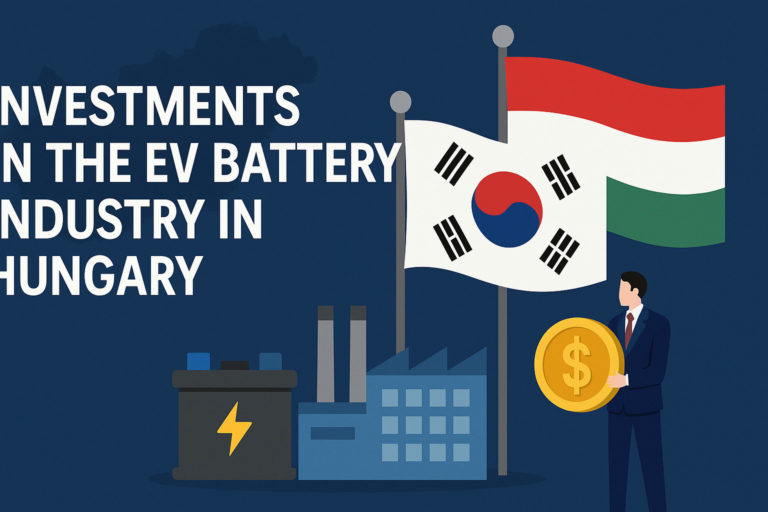
Investment Trends of South Korean Manufacturers in Hungary

Hungary is rapidly becoming a key European hub for South Korean manufacturing, with major investments in EV batteries, semiconductors, metal materials, electronics, and home appliances. Projects include SK On’s €2 billion battery plant in Iváncsa, Samsung SDI’s €1 billion expansion in Göd, EcoPro BM’s cathode facility in Debrecen, and Solus Advanced Materials’ copper foil capacity boost. This article provides an overview of investment amounts, construction progress, and operational timelines for Korea’s flagship projects across Hungary.