Introduction: Why Hungary Is Chosen as a Manufacturing Base
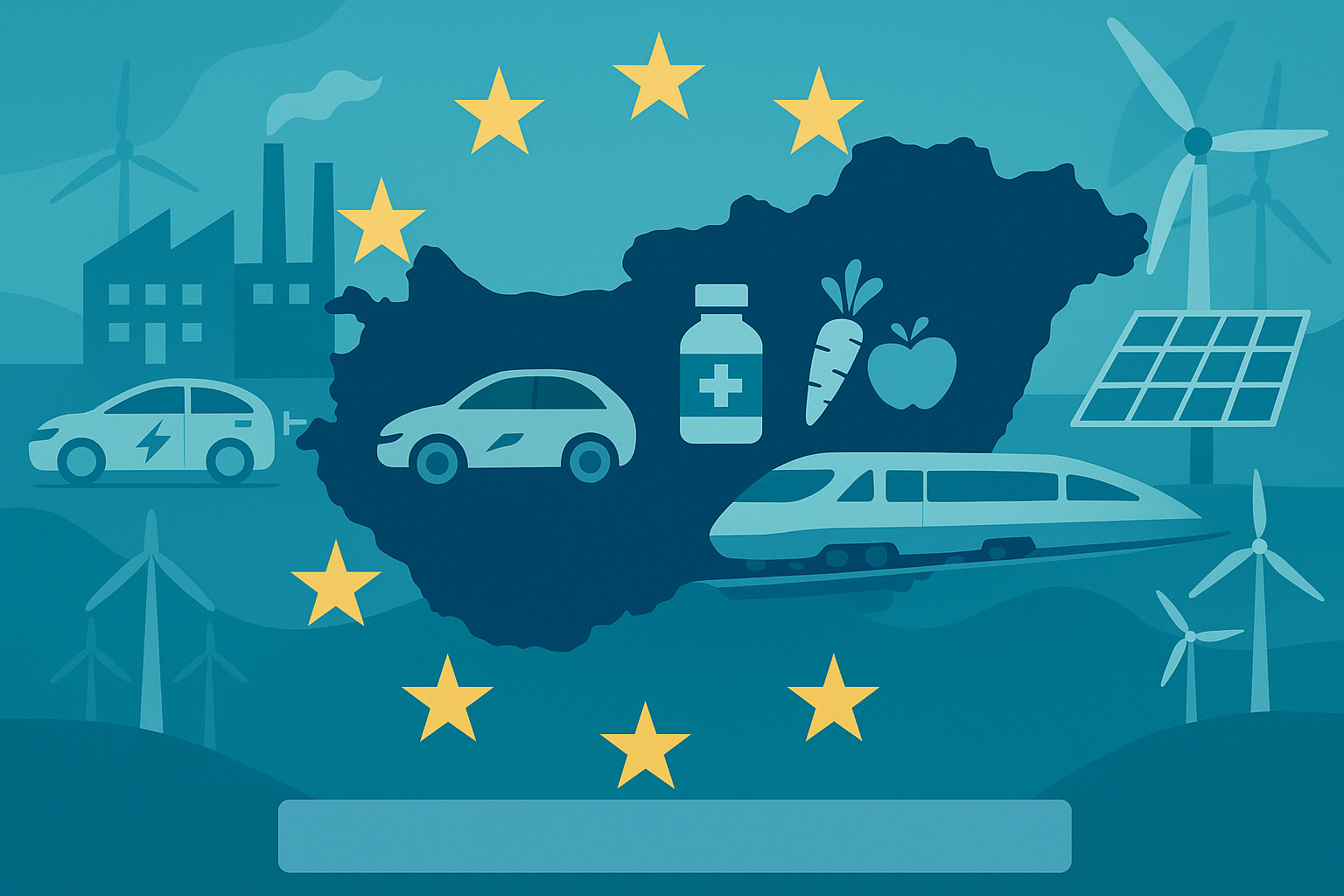
Located in Central Europe, Hungary has become a key investment destination for European manufacturing companies in recent years. Thanks to its central location, skilled workforce, and stable business environment, firms from Germany, France, Italy, Sweden, Finland, the Netherlands, Austria, and beyond have established operations. The government actively supports FDI with corporate tax incentives, cash grants, and “strategic partnership” agreements. EU environmental rules and supply-chain reconfiguration have also provided tailwinds, prompting a wave of new plants and capacity expansions—especially in EVs and green technologies. This article summarizes developments through 2025, highlighting sector-by-sector moves by European manufacturers in Hungary.
Automotive: German Premium Makers Lead the EV Push
Autos remain Hungary’s industrial backbone, and the country uniquely hosts production sites of all three German premium brands—Audi, Mercedes-Benz, and BMW—outside Germany and China. Each is investing heavily to align local factories with electrification strategies.
- Audi (Germany) – Audi Hungaria, Győr A pioneer since 1993, Audi Hungaria employs roughly 11,000 and operates one of the world’s largest engine plants. EV momentum has accelerated: electric drive production began in 2018, followed by a €300 million capacity increase for e-powertrains and associated hiring. By 2024, annual e-drive output reached around 150,000 units, and cumulative investment exceeded €12+ billion, underscoring Audi’s role as a top investor in Hungary.
- Mercedes-Benz (Germany) – Kecskemét Operating since 2012 with about 4,500 employees, Mercedes announced €1+ billion to add an EV-dedicated assembly hall and a new body shop. From 2024 it started producing high-value models on the MMA platform, and in 2025 will launch full EVs on MB.EA. Capacity is set to approach 300,000 units annually. A co-located battery assembly facility further elevates the site’s strategic importance.
- BMW (Germany) – New EV Plant, Debrecen BMW is building a greenfield, EV-only factory in Debrecen, slated to start series production in late 2025. Total investment exceeds €2 billion with 2,000+ new jobs. The plant targets about 150,000 units/year of “Neue Klasse” EVs and will include a high-voltage battery assembly plant, enabling an integrated vehicle-and-battery operation.
- GKN (UK) – Felsőzsolca The British driveline specialist opened a large driveshaft plant in northeastern Hungary. With investment in the hundreds of millions of euros, it is ramping toward millions of shafts per year to supply domestic BMW, Mercedes, Suzuki, and Audi sites, shortening lead times and localizing supply for both ICE and EV programs.
Beyond OEMs, German suppliers like Bosch, Continental, Schaeffler, and ZF operate multiple plants across Hungary, employing tens of thousands and steadily expanding sensor, electronics, and chassis production aligned with e-mobility needs.
Transport & Heavy Industry: Rail, Aerospace, and Defense
Outside of passenger cars, European companies have broadened Hungary’s role in other transport segments—rail, aerospace, and defense.
- Stadler (Switzerland) – Szolnok Stadler expanded its car-body facility, making Szolnok the group’s largest production site. Recent investments lifted annual capacity above 200 car bodies, including double-deck units, to meet growing European rail demand.
- Airbus Helicopters (France/Germany) – Gyula Airbus set up a helicopter components plant producing main rotor blades and precision transmission gears. Employment surpassed 150, and localized surface treatment has enabled end-to-end production in Hungary as part of a broader defense-industrial partnership.
- Rheinmetall (Germany) – Zalaegerszeg The defense group inaugurated a state-of-the-art armored vehicle factory for the Lynx IFV, with on-site testing infrastructure and plans for ~350 jobs. The facility is set to expand into unmanned systems and precision munitions assembly in collaboration with European partners.
Electronics & High Tech: A Selective but Growing Footprint
While large-scale consumer electronics in Hungary is often led by Asian brands, European players continue to strengthen high-value niches.
- HMD Global (Finland) In 2023, HMD launched EU-based smartphone assembly for the Nokia XR21 in Hungary, catering to security-conscious enterprise customers and symbolically reviving “Made in Hungary” smartphone production.
- Bosch (Germany) With about 14,000 employees nationwide, Bosch runs multiple plants producing automotive ECUs, sensors, and power-tool motors, and has added e-bike drive lines. The company also invests heavily in R&D and university partnerships.
- Electrolux (Sweden) Historically significant in vacuum cleaners and refrigerators, the company has restructured in recent years. Even so, it helped build Hungary’s appliance ecosystem, and supplier ties continue across Central Europe.
Other European technology firms—such as NXP (Netherlands) with design capabilities and Schneider Electric (France) in power distribution—maintain a presence, particularly in specialized, higher-value production and engineering.
Chemicals & Green Tech: Europe’s Sustainability Agenda on the Ground
European chemical and materials companies are using Hungary to scale greener processes and products.
- Verbio (Germany) – Gödöllő Through its Hungarian unit XiMo, Verbio is building a €27.7 million plant to produce olefin-metathesis catalysts, enabling petrochemical processes to switch to renewable feedstocks. The site will support Verbio’s biochemicals supply chain and create highly skilled jobs.
- BASF (Germany) – Komárom BASF operates a plant for automotive exhaust catalysts with capacity for parts used in millions of vehicles per year. The company also produces plastic components in Budapest and is exploring broader European cathode-materials strategies relevant to Hungary’s EV value chain.
- Knauf (Germany) & Rockwool (Denmark) Both building-materials firms manufacture insulation in Hungary and have modernized capacity to meet EU energy-efficiency demand, contributing to the green-retrofit wave across the region.
Food & Consumer Goods: Serving the Local Market and the EU
Consumer goods producers leverage Hungary as both a domestic supplier and an EU export hub.
- Nestlé (Switzerland) – Bük (Purina) One of Europe’s largest pet-food plants has seen cumulative investment of hundreds of millions of euros. Recent expansions added ~100,000 tons of annual capacity, bringing total output near 300,000 tons, with ~90% exported and ~1,500 employees on site.
- LEGO (Denmark) – Nyíregyháza Since 2008, LEGO’s Hungarian site has grown into a full-process factory (molding, decoration, assembly, packaging). A €138 million expansion running through 2025 adds two packaging halls and 17 lines, increasing headcount by up to 300 and supporting sustainability targets such as reduced gas usage via solar and geothermal systems.
- Heineken (Netherlands) – Sopron The beer maker continues to modernize the historic Sopron brewery, investing billions of forints in fermentation tanks and QA systems while expanding local sourcing of hops.
- Bonduelle (France) – Multiple Sites With three vegetable-processing plants, Bonduelle has invested €12+ million since 2020 to expand cold storage and warehousing, strengthening contract farming links with Hungarian growers and boosting exports of frozen vegetables.
Pharma & Life Sciences: European Capital Builds on Local Strength
Pharma is a traditional Hungarian strength. European ownership and reinvestment are deepening capabilities in production and R&D.
- Egis (Servier Group, France) – Körmend Egis announced a €37.5 million project to modernize solid-dosage and formulation lines and expand warehousing. Körmend now accounts for roughly 60% of Egis’s finished-drug output, with global distribution to 100+ countries.
- Sanofi (France) – Budapest & Beyond Following the historic acquisition of Chinoin, Sanofi operates API and formulation sites in Hungary and has made multi-tens-of-millions-euro upgrades for digitalization and environmental performance. Hungarian facilities also contributed to EU vaccine supply logistics.
- Novartis (Switzerland) – Budapest In 2023, Novartis opened a regional R&D hub in Budapest, employing several hundred specialists and coordinating clinical and discovery activities across CEE—another sign of Hungary’s growing white-collar life-sciences base.
Conclusion: Economic Impact and Outlook
European manufacturers have expanded across autos, rail/aerospace/defense, electronics, chemicals, food, and pharma in Hungary, with momentum accelerating into the mid-2020s. In autos alone, investments by the German trio and key suppliers are positioning Hungary for the EV era, while rail and defense projects add depth to heavy industry. Food and pharma investments broaden the base with export-oriented, value-added production.
These projects have created tens of thousands of jobs and lifted export capacity, reinforcing Hungary’s status as a manufacturing hub of Central Europe. Challenges remain—environmental compliance, workforce development, and infrastructure—but the government continues to pair EU funds with national incentives to address them. With electrification and sustainability as guiding themes, Hungary stands out as a “new growth frontier” for European industry—one that business readers should continue to watch closely.