

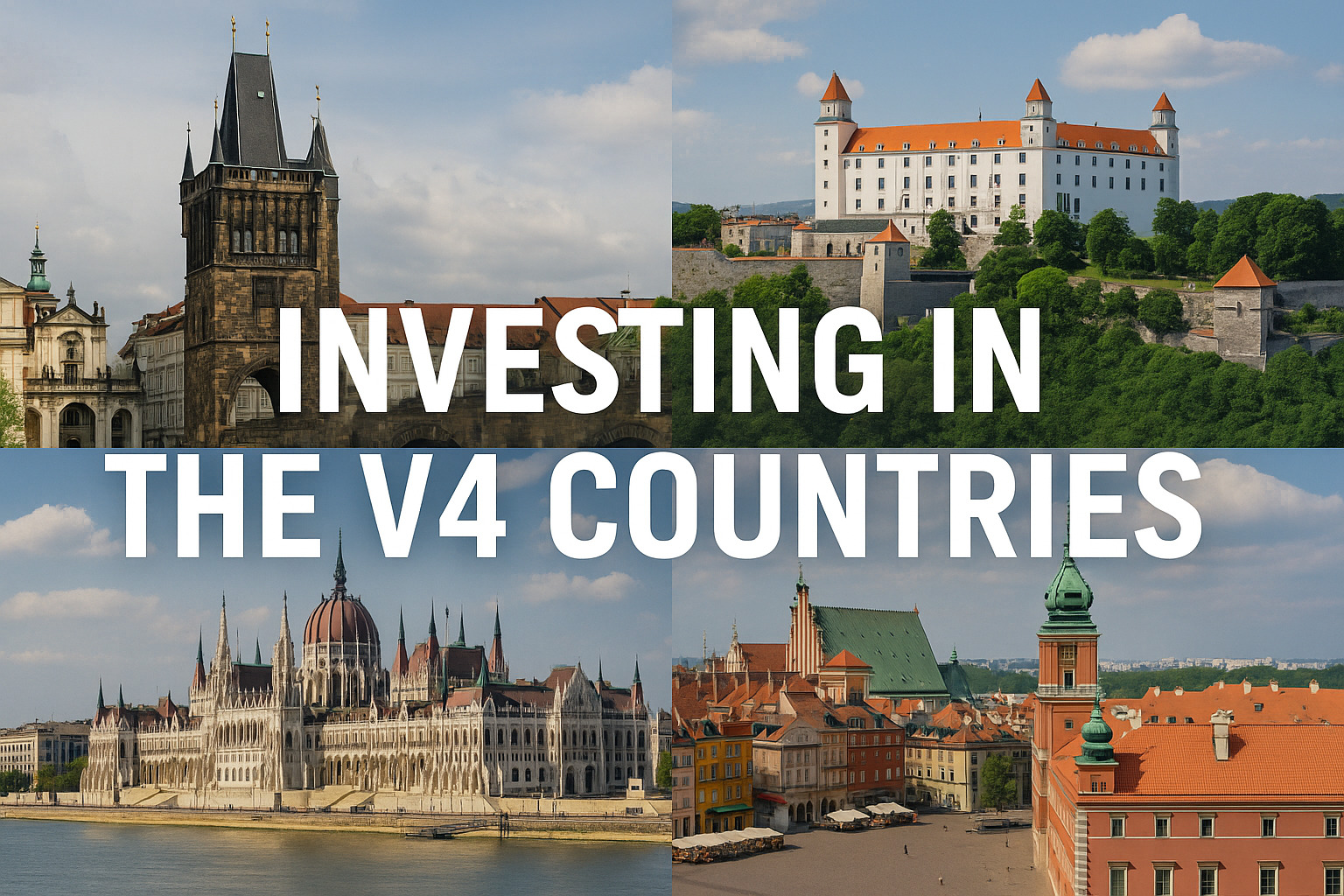
The Visegrád Four (V4) countries of Central Europe—Hungary, Poland, the Czech Republic, and Slovakia—have recently been attracting attention as important investment destinations for Japanese manufacturers. As EU member states, these four countries are hubs for manufacturing industries such as automotive production, offering advantages in labor and logistics that have drawn many Japanese companies. For example, Hungary alone hosts over 200 Japanese companies employing around 30,000 people. This article organizes major new investment projects by Japanese manufacturers in each country, examining their background and future outlook.
Hungary: Major Investments in EV-Related and Food Sectors
Hungary has emerged as a major hub for the electric vehicle (EV) battery industry within the EU, and Japanese investment has been active. The government’s proactive approach to attracting foreign investment, with large subsidies and tax incentives, has provided a further boost. Key projects include:
- Nissin Foods: Following its 2004 plant in Kecskemét, Nissin Foods is building a second factory in the city. The investment totals about HUF 40 billion (approx. JPY 16 billion), aiming to double production capacity. The expansion will increase the workforce by about 100 to 600 employees, with the government providing more than HUF 10 billion in subsidies. About 90% of output—cup and bag noodles—will be exported to 35 European countries.
- Nippon Paper Industries: In May 2025, Nippon Paper opened its first European production base for its chemical business in Batsláty, near Budapest. The new plant produces CMC (carboxymethyl cellulose) for lithium-ion batteries used in EVs. The Hungarian government granted approximately HUF 2.3 billion (about JPY 940 million) in subsidies to support the company’s entry into the EV battery market. This is Nippon Paper’s first overseas CMC plant, which began trial operations in February before starting full-scale production.
- TDK: In 2024, TDK announced an investment of about HUF 26 billion (approx. JPY 6.7 billion) to expand its facilities in Szombathely in western Hungary. According to the Minister of Foreign Affairs and Trade, this expansion will create around 250 new jobs. TDK Hungary manufactures automotive sensors, and the expansion will further strengthen supply capacity for the European market.
Poland: Large Investments in Green Technology and Automotive Parts
Poland has the largest market size among the V4 countries, and recent Japanese investments have been notable in the heat pump industry and automotive electrification. Incentives from the Polish Investment and Trade Agency (PAIH) and tax benefits in special economic zones are attractive. Key projects include:
- Daikin Industries: To meet the rapidly growing demand for heat pumps in Europe, Daikin is building a new heat pump heating equipment plant in Ksawerów, Łódź Province. The total investment of approximately EUR 310 million (about JPY 42.3 billion) is reportedly the largest ever by a Japanese company alone in Poland. The project is expected to create around 3,000 jobs at full scale. Once operational, the plant will quadruple Daikin’s European production capacity compared to 2021, targeting an annual output of 500,000 units.
- Mitsui & Co.: In August 2024, Mitsui announced it would establish Polska Mittal Steel (PMS) in Skarbimierz in the south of Poland to process electrical steel sheets for hybrid and electric vehicle motor cores and transformers. With capital of about JPY 3.4 billion and an annual processing capacity of 34,000 tons, the plant is scheduled to start operations in April 2026. Mitsui already operates similar facilities in the Netherlands and the Czech Republic; its Polish entry will strengthen the European EV supply chain.
Czech Republic: Entry into Advanced Packaging and Renewable Energy Sectors
The Czech Republic has long been strong in mechanical engineering and automotive industries, with about 265 Japanese companies operating mainly in manufacturing. Recently, environmentally friendly materials and new investments aligned with EU environmental policies have stood out. Key projects include:
- TOPPAN: Toppan Printing Group built a new transparent barrier film plant in Most, northwestern Czech Republic, and held its opening ceremony in June 2025. This is the group’s first film production site in Europe, producing high-performance packaging materials for food and pharmaceuticals locally. Although the investment amount has not been disclosed, the Czech government granted tax incentives worth about CZK 522 million (USD 21.8 million) to attract the project. The plant will supply easily recyclable mono-material packaging compliant with the EU’s new Packaging and Packaging Waste Regulation (PPWR) to meet demand across Europe.
- Daido Metal: To tap into the decarbonization energy market, Daido Metal is building a dedicated factory for offshore wind turbine main bearings on its existing site in Brno. Announced in May 2023, the JPY 6 billion facility covers 10,000 m² and is scheduled to start operations in 2025. Initially staffed by 20–30 employees, it will produce 300 large hydrodynamic bearings per year for offshore wind turbines.
- Panasonic: Panasonic is investing about JPY 20 billion in its Plzeň plant to expand production capacity for air-to-water (A2W) heat pump water heaters. Having begun local production of outdoor units in FY2023, it plans to reach an annual capacity of 500,000 units by FY2025.
- Hitachi Energy (formerly Hitachi ABB Power Grids): In December 2024, the company announced an investment of about CZK 1.1 billion (USD 47 million, JPY 6.9 billion) to expand production facilities in Brno by 40%, to be completed by the end of 2025. This will create about 200 new jobs and increase output of gas-insulated lines (GIL) and gas-insulated switchgear (GIS) to meet demand for integrating renewable energy into power grids.
- Toyota Motor Corporation: Toyota plans to begin production of its first fully electric SUV in Europe at its Kolín plant in 2028. This will be the company’s first EV manufacturing operation in the country utilizing an existing facility. While the investment amount has not been disclosed, the project aims for an annual production capacity of approximately 100,000 units, aligning with the EU’s 2035 ban on internal combustion vehicle sales while optimizing regional logistics and cost efficiency at the plant.
Slovakia: Parts and R&D Investments in an Automotive Powerhouse
Although small in population, Slovakia boasts the world’s highest per-capita automobile production. Following Volkswagen, Hyundai-Kia, Stellantis, and Jaguar Land Rover, Volvo is building an EV plant near Košice, scheduled to begin operations in 2026, strengthening the supply chain.
- MinebeaMitsumi: In May 2024, MinebeaMitsumi opened a new R&D center at its existing site in Košice to foster high-level human resources and develop technologies. The center develops brushless DC motors (BLDC), actuators, and software, aiming to employ up to 200 engineers. Collaborating with the Technical University of Košice, it also helps prevent brain drain and create high-value jobs.
- Sekisui Chemical: Sekisui signed an MoU with the Slovak Ministry of Economy in February 2024 to explore establishing a production base for lightweight, flexible perovskite solar panels. The company aims for commercialization by 2025 and is considering large-scale panel production in Slovakia, which would contribute to the country’s green industry development.
Why Japanese Manufacturers Focus on the V4
Several common factors are driving increased Japanese investment in the V4:
- Market access and logistics: Located in the heart of the EU, the V4 allows for short lead-time supply to European markets. The EU single market eliminates intra-EU tariffs and lowers logistics costs, while reducing long-distance shipping risks.
- Proactive government support: All V4 governments actively compete to attract manufacturing, offering corporate tax reductions, investment subsidies, and land grants. For example, Hungary supported 72 Japanese investment projects totaling HUF 644 billion from 2014 to 2024, creating about 5,200 jobs.
- EU policy trends: The European Green Deal and stricter environmental regulations increase the importance of local production for EVs, batteries, renewable energy, and energy-saving appliances. Japanese companies with strong technology in these fields see local production as a way to seize opportunities, respond quickly to regulations, and work closely with customers.
Conclusion
This review of new Japanese manufacturing investments in the V4 countries shows a wave of large-scale projects in decarbonization and digitalization-related fields in 2025, supported by government incentives and creating win-win relationships. Demand for EVs and renewable energy will likely spur further facility investment and new entries.
However, challenges such as rising labor costs, talent shortages, and geopolitical risks (e.g., the prolonged Ukraine conflict) remain. Ongoing monitoring of local business environments, strategic use of government support, and optimized regional production networks will be key. For manufacturing industry stakeholders, the V4 remains a promising area for European strategy, where agile and collaborative production setups can strengthen global competitiveness.
Reference
Planning a factory project in Europe?
We help companies find partners and engineering support for manufacturing projects in Europe.


