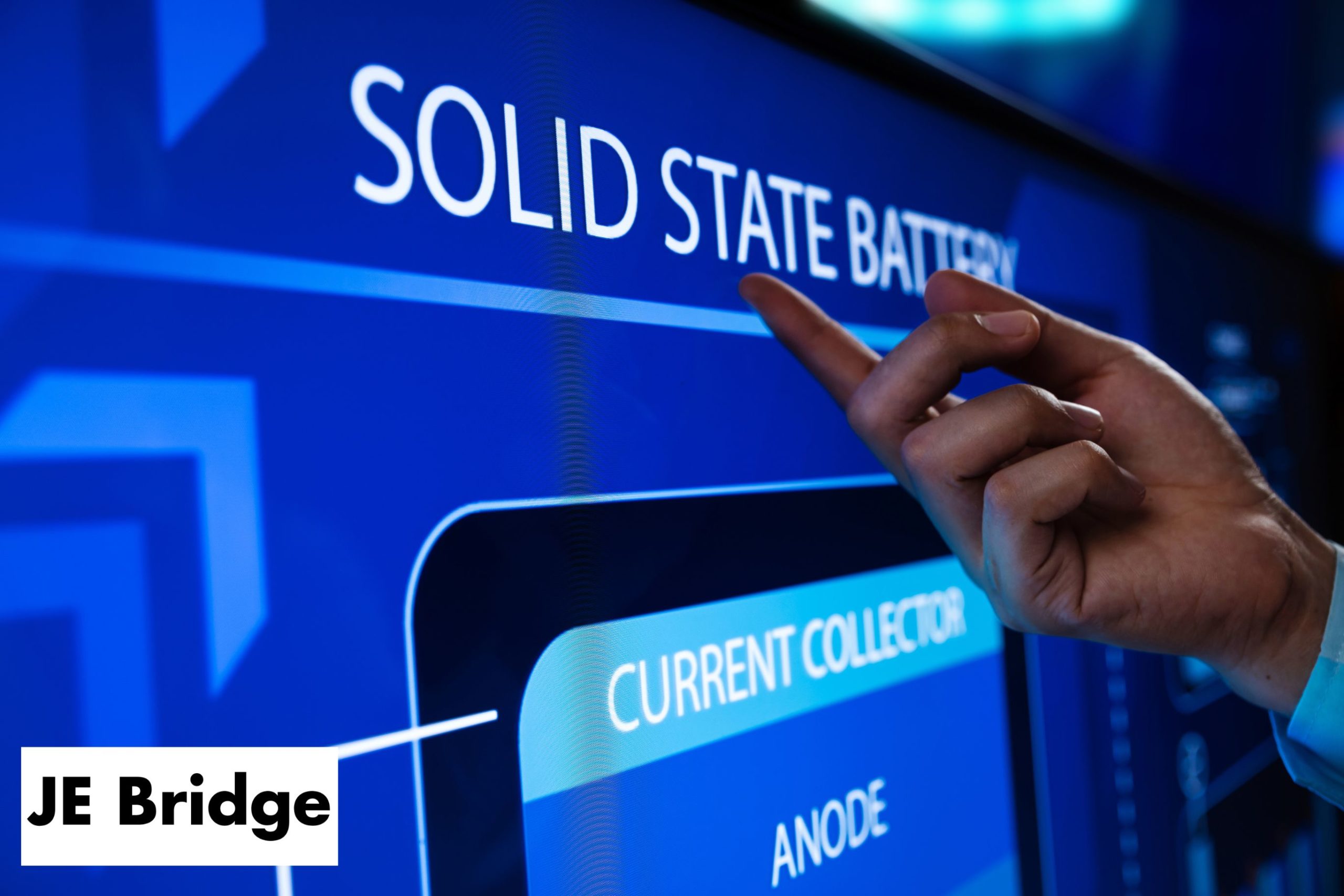
As electric vehicles (EVs) continue to gain momentum worldwide, next-generation battery technology is stepping into the spotlight — namely, the All-Solid-State Battery (ASSB).
Compared to conventional lithium-ion batteries, ASSBs promise higher energy density and enhanced safety, holding the potential to address multiple challenges at once, such as driving range, charging time, and thermal stability.
Now, Japan’s leading automakers are working to not just catch up — but to take the global lead in the development and commercialization of this groundbreaking technology.
🚗 Toyota × Idemitsu: Aiming for the World’s First Mass Production Using Sulfide-Based Electrolytes
Among the materials used in ASSBs, sulfide-based solid electrolytes are considered the most promising — but also the most technically demanding. Rising to this challenge are two Japanese powerhouses: Toyota Motor Corporation and Idemitsu Kosan.
Both companies have been conducting research on solid electrolytes for over two decades. Idemitsu brings expertise in lithium sulfide–based electrolyte synthesis, while Toyota focuses on battery integration and vehicle-level optimization. In 2024, they officially announced a strategic partnership and aim to begin operations at a large-scale production plant in Chiba by 2027, with an annual capacity of 1,000 tons.
Toyota is targeting the launch of an EV equipped with ASSBs around 2027–2028, with ambitious specs such as 1,000 km of driving range and 10-minute fast charging.
🛠️ Honda: Demonstration Line Built with Mass Production in Mind
In 2024, Honda established a demonstration production line at its Tochigi Plant to begin the trial production and evaluation of ASSB cells.
Source: Honda Investor Materials
Honda’s strategy is to “go slow to go fast.” Rather than rushing commercialization, the company is taking a steady approach by thoroughly validating cell structure, material selection, and manufacturing processes — building a strong technological foundation first.
This cautious approach reflects Honda’s enduring commitment to safety and quality.
⚙️ Nissan: Pilot Line in Operation, Commercialization by 2028
In 2025, Nissan began operations at its pilot plant within its Kanagawa R&D facility to manufacture ASSB cells.
Source: Nikkan Jidosha Shimbun (NetDen)
The goal: Commercial production by fiscal year 2028. Nissan is focusing on developing its own unique cell architecture and manufacturing processes, targeting applications not only in EVs but also in its e-POWER hybrid systems.
Nissan’s ASSBs are expected to offer high energy density, fast charging, and exceptional thermal stability — key attributes to secure competitive advantage in the battery market by 2030.
🧭 Japan’s Edge: IP Strength, Manufacturing Expertise, and Materials Science Integration
According to TrendForce, Japan holds the largest share of global ASSB-related patent filings at 36%, outpacing China (27%) and South Korea (18%).
This indicates that Japan’s strength lies not only in research but in a fully integrated capability — spanning materials, manufacturing, quality control, and commercialization.
The cooperative model between automakers and materials suppliers, like Toyota and Idemitsu, is uniquely Japanese and offers a strategic advantage.
🌍 Connecting with Europe: Opportunities in Central and Eastern Europe
As commercialization of ASSBs progresses, local production and material supply in Europe — particularly Central and Eastern Europe — will become strategically important.
Idemitsu is already considering future expansion into Europe, and if its collaboration with Toyota advances, joint ventures or production hubs in CEE could follow.
Japanese materials manufacturers are also increasing their footprint in Europe, creating growing opportunities for partnerships with EU-based firms to build robust, local supply chains.
✅ Conclusion
All-solid-state batteries are more than just an upgrade — they are a transformative technology that will reshape energy systems, mobility, manufacturing, materials, and even regional economies.
Japan’s automakers and materials companies are positioning themselves at the forefront of this transition. And that movement is beginning to resonate — not only within Asia, but across Europe and the global EV ecosystem.